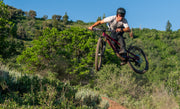
For an everyday commuter or a health and fitness enthusiast, bicycles are fast becoming the new bling. Its popularity is on the rise as cycling gives you all the benefits of commuting and having a nice workout in one go. More importantly, as more and more roads are getting bike-friendly, getting around town on a two-wheeler has never been easier.

But having a gorgeous head-turner bicycle is not all there is for a great bike ride. The efficiency of your bicycle lies on your tires simply because of one practical reason: you can’t go anywhere far with a flat tire. So for someone who peddles a lot, read on as we give you six important tips to prevent flat tires on your bike.
Know the Basics of Tire Maintenance
The first step in preventing a flat tire is learning the basics of tire care. Depending on how frequently you hop on your saddle, it’s important to check your tires regularly. You may not notice it while cycling but there are small objects on the road that can hurt our tires. A broken piece of glass, rock shards, or a rusty nail may go unnoticed especially when you’re busy snaking the traffic. These objects may not cause immediate damage but may cut your tire as they closely work their way through.
To prevent this, check your tires periodically for stuck sharp objects or debris. Some regular bike commuters wash their tires every after week, while others prefer to check the tires every after use.
Use Tires Suitable for the Terrain
You may also probably be wondering why you keep having a flat tire when you’re doing a good job at basic tire maintenance. There’s nothing more frustrating when you gave all the care you could, but you still ended up having a flat tire. One possible reason is you are using the wrong tire. That’s why choosing the right kind of bicycle is one of the keys to preventing a flat tire so always consider your riding style when buying one.

For instance, if you’re using your bike to commute to work, and the road you usually drive on is mostly smooth, narrow tires will work for you. However, when on bumpy, rocky, or sandy terrains, narrow tires are not the best choice. Wider tires can gain more traction and are more suitable for these kinds of terrains.
While If you’re in for off-road riding, mountain bike tires are specifically made to withstand unpaved surfaces. Some mountain bike tires are specially designed to prevent punctures as mountain biking terrains usually have rocks, roots, and steep trails.
Install Bicycle Tire Liners
If you live in an area where thorns and road debris are common, bicycle tire liners will do most of the work to help you prevent flat tires. Tire liners are extra layers of thick plastic that fit between the tire and the tube. This extra layer will prevent punctures as it protects the tire tread from common sharp objects such as thumbtacks, glass, or nails. Installing a tire liner is not rocket science and most tire liners come with simple instructions on how to install them. But if you want to make sure that you install it correctly, your dealer can do the installation for you.

Some cyclists notice a difference in weight after installing a tire liner. The extra weight may slow you down a bit, but depending on the kind of road you’re cycling, tire liners are worth it.
Tannus Tires offer several solutions such as tire liners and airless tires. Learn more here: https://tannusamerica.com/
Have the Right Amount of Tire Pressure
Overinflation and underinflation will both hurt your bike tires. Not only that, overinflated tires have less grip on the road and increase rolling resistance. It makes you think that you’re riding fast at first, but as you bike on, the rolling resistance reaches a breakpoint where you are actually pedaling slower. Whereas underinflated tires are more prone to pinch flats which happens when you hit sharp edges or sharp objects on the road or trail.
That’s why it is important to take note of the recommended PSI. PSI stands for pounds per square inch. It is the unit of measurement that measures the air pressure inside your tire. Usually, the maximum amount of PSI is indicated on the sidewall of the tire. However, achieving the recommended PSI depends on the biker’s weight and the tire width.
Watch Where You’re Going
If you’ve been cycling for a while now, chances are you already have the misfortune of experiencing flats. While punctures may not be entirely avoided, there are still ways to prevent them from happening.
When on the road, you may think that the closer you are to the gutter, the safer you will be. But this will not only let you hit the gutter, but you also hit the debris, dirt, and other small objects that have been accumulated on the edge of the road. Moreover, it is not actually safe for you to drive so close to the gutter as you don’t have enough space to maneuver when a situation arises and worse, coming car drivers may not see you as they pay less attention to people in their peripheral vision.
While it’s not easy to avoid all the sharp objects while cycling, do try to drive around these things when you see one as much as possible.
Go Tubeless
While tubeless tires may cost you money, there are a number of reasons why some bike enthusiasts are switching to tubeless tires willingly. Tubeless tires require less air pressure making your grip better and your ride more comfortable. More importantly, they are more resistant to flats than tubed tires as they have thicker and heavier casing rubber for added protection.
If in case you hit a sharp object and cause a minor puncture, the liquid sealant that comes with the tubeless tire will automatically help you plug the hole while you’re on the move. Tubeless tires will prevent you from getting an overall flat.
Final Thoughts
For a daily bike commuter, there’s nothing more rewarding than a nice comfortable bike ride. For most of us, we expect the most convenience out of our bicycles. But for a bicycle to run smoothly, its tires should also be well taken care of. So, before you hop on your bike and start pedaling, consider these six tips and enjoy a nice bike ride whenever and wherever.
About the author: Chelsea Smith is the editor and content creator at Cycling Hacker. She's crazy about all things cycling and spends most weekends exploring mountain biking trails in her home state of Utah.
Previous article
Next article