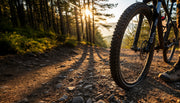
Public lands are the heartbeat of our adventures. They're the winding singletrack through towering pines, the high-alpine lakes we cool off in, the red rock trails that carve through memory and muscle. They're where we go to breathe deeper, think clearer, and reconnect with what really matters.

And right now, more than 3.3 million acres of that land, your land, is at risk of being sold.

A new amendment passed in Utah to be included in the “One Big Beautiful Bill,” would mandate the sale of up to 0.75% of U.S. Forest Service and Bureau of Land Management lands. That’s four times the size of Rhode Island on the table for private purchase with little oversight or accountability.

This isn’t a partisan issue, this is a public one.

Whether you're a lifelong hunter, a weekend trail runner, a backcountry biker, or someone who simply values open space for future generations, this affects you. These lands belong to all of us. And once they’re sold, they’re gone, forever changed with limited to no access for us. 

Land for All, Not Just the Few

At Tannus, we make gear for people who ride wild. But more than that, we’re part of a community that values open access, wild beauty, and the freedom to explore. This isn’t about politics. It’s about values: freedom, responsibility, and stewardship.

This land isn’t red or blue, it’s green, it’s golden, and it’s ruggedly wild.

The proposed bill fast-tracks land sales under vague terms, opening millions of acres to development far from urban centers and without meaningful public input. It weakens environmental safeguards and bypasses judicial review. And it treats some of the last, best wild places as expendable.

We don’t believe in selling off the very places that make this country special.

We believe in protecting them, for all walks of life, all generations, and all people.

Stewardship Starts with Showing Up

Just weeks ago, the outdoor community helped strike down 500,000 acres of proposed land sales from the House’s version of this bill. Now, the Senate’s version is back with six times that amount.

This isn’t about stopping progress. It’s about guiding it with wisdom.

It’s about making sure decisions about our public lands involve the public.

It’s about standing up, not for politics, but for principles.

7 Ways You Can Help Right Now

  1. Call Your Senators.
    Use the 5 Calls app to quickly find and contact your representatives. Tell them you oppose the forced sale of public lands.

  2. Send an Email.
    Use this Outdoor Alliance Action Form to send a pre-written message in under 60 seconds.

  3. See What’s at Risk.
    View the interactive map showing what land could be sold, it's land you have rode on and love.

  4. Talk About It.
     Share this issue with your trail group, riding crew, neighbors, and friends. Let people know what’s happening. Share this blog, others posts, everything you can to help people realize what's at stake! 

  5. Give Back.
    Join a trail day, organize a cleanup, or support organizations that protect and maintain our shared spaces.

  6. Stay Informed.
    Follow updates, stay involved, and be ready to speak up again. Stewardship is ongoing.

  7. Stand Together.
    This is a movement for all Americans, for nature lovers, outdoor families, and future adventurers alike.

We Ride Together, We Rise Together

This land gives us so much. Joy, challenge, healing and freedom. It’s our responsibility to give back, to protect what we love.

So yes, ride hard. But also ride with purpose. Because what’s at stake isn’t just access to the trail, it’s the promise of public land for everyone to enjoy! 

This is your line to drop. Keep it public, keep it wild and always keep showing up!

- The Tannus Team

(All Photos taken by Wyatt Peterson Studios) 


Additional Posts...

  • America's Worst Cities for Bike Flats, Ranked

    America's Worst Cities for Bike Flats, Ranked

    Every cyclist swears their city is the worst for bike flat tires. We checked. Using current state noxious weed registries, city task force records, and PeopleForBikes' 2026 City Ratings, we ranked America's 10 worst and 10 best cities for bike flats, and the answer isn't just "wherever it's dry." Denver runs two street sweepers for its entire bike lane network. Salt Lake City pays a bounty on the goathead thorns wrecking tires along the Jordan River Trail. Meanwhile, some of the most celebrated bike-friendly cities in the country, Fort Collins, Davis, Provo, sit smack in the middle of goathead's mapped range, proof that great infrastructure and flat-proof riding are two different problems.

    See where your city lands, what's actually causing your flats (goatheads, glass, or both), and why the fix isn't a better bike lane. It's the right tire for where you actually ride.

  • Sealant Has One Job. You're Making It Do Five.

    Sealant Has One Job. You're Making It Do Five.

    Tubeless sealant seals small punctures up to about 5-6mm, and checking it every 2 to 4 months keeps it working, that's the entire job it was built for. It won't stop a rim strike, cushion a pinch flat, or keep your tire from squirming at low PSI, three failure points that have nothing to do with a hole in the tread. This post breaks down exactly what sealant can and can't do, how goathead thorn country changes your maintenance schedule, and why pairing sealant with a tubeless tire insert covers the gaps sealant was never designed to close.

    Tannus Tubeless Inserts use hydrophobic Aither 1.1 foam that doesn't absorb sealant, so you get rim protection, pinch-flat resistance, and confidence at lower pressures without adding maintenance or wheel weight. It's the same setup racers run at events like Leadville and the Unbound Gravel Grand Prix: sealant handles the punctures, the insert handles everything else.

  • Armour, Tubeless, or Airless: Which Tannus Belongs in Your Wheels?

    Armour, Tubeless, or Airless: Which Tannus Belongs in Your Wheels?

    Nobody's ever finished a ride bragging about the flat they fixed on the shoulder. Tannus makes three flat protection products that stop that from happening, and yes, all three share the same name, which is exactly why riders mix them up. Tannus Armour is a 15mm foam insert built for tube setups. Tannus Tubeless Inserts protect rims and back up sealant on tubeless setups. Tannus Airless skips air completely with a solid foam tire built for commuters. Pick the one that matches what's already inside your tire and ride on.

    This guide lines up all three side by side, including who each one is actually built for: e-bike riders and commuters running tubes, gravel and mountain bikers protecting their rims, and city riders ready to retire air pressure for good. Read it once and you'll know exactly which Tannus belongs in your wheels, in about the time it takes to fix a flat.

  • A kid rides a bike at night, with fireworks in the background of the image.

    Why July Is the Worst Month for Flats (Nobody Tells You This)

    July doesn't have one cause behind its flat tires. It has four, all stacking up at once: softer asphalt that holds onto debris, tube pressure that climbs as the pavement heats up, and more broken glass and goatheads left behind after holiday weekends. That's the real reason bike tires go flat more in summer than any other season, and most riders only ever hear about one piece of it.

    This breaks down exactly what's happening to your tires this month, then shows what actually stops it. Tannus Armour is a foam liner that blocks debris before it ever reaches your tube, and Tannus Airless tires remove the tube and the air pressure altogether, so there's nothing left for the heat to work against.

  • Tannus Airless tires on a commuter bike, riding down a New York City street at golden hour after a rainstorm.

    The City Tire That Disappears Into Your Ride

    Your commuter tires are supposed to be the last thing on your mind. The light changing two blocks up, the pothole on your usual route, whether you locked up in time, that's what fills a commuter's headspace. The tire is just supposed to work. 

    City riding asks more from a tire than most people realize. Glass in the bike lane, wet metal grates, sun-softened asphalt, the specific hostility of a road that hasn't been repaved since 2019. Most commuters are rolling on whatever came stock with their bike, which means rolling on a compromise. This is what a commuter tire actually needs to do, and why riders in New York, Chicago, Seattle, and Portland are making the switch to airless.